Want to calculate Azure costs accurately and avoid billing surprises? You’re not alone. With Microsoft Azure’s vast array of services, tracking expenses can feel overwhelming—until you know the right tools and techniques.



Calculate Azure Costs: Why It’s Critical for Cloud Success

Understanding how to calculate Azure costs isn’t just about saving money—it’s about gaining control over your cloud environment. Without proper cost visibility, organizations risk overspending, inefficient resource allocation, and lack of accountability across teams.
Understanding the Risks of Unmanaged Cloud Spending
One of the biggest pitfalls in cloud adoption is the assumption that pay-as-you-go pricing automatically equals cost efficiency. In reality, without monitoring, unused virtual machines, idle databases, and over-provisioned storage can silently inflate your monthly bill.
- Orphaned resources (e.g., disks not attached to VMs) continue to incur charges
- Development environments left running 24/7 can cost thousands annually
- Lack of tagging leads to untraceable spending across departments
“The average enterprise wastes 30% of its cloud spend due to poor governance and lack of visibility.” — Flexera 2023 State of the Cloud Report
How Calculating Azure Costs Drives Business Value
When you can accurately calculate Azure costs, you unlock strategic advantages beyond cost savings. You gain the ability to forecast budgets, justify cloud investments, and align IT spending with business outcomes.
- Enable chargeback or showback models for internal departments
- Support cloud financial management (FinOps) initiatives
- Improve decision-making for workload migration and scaling
Key Components That Influence Azure Pricing
To effectively calculate Azure costs, you must first understand the building blocks of Azure’s pricing model. Unlike traditional on-premises infrastructure, Azure charges are dynamic and depend on multiple interdependent factors.
calculate azure costs – Calculate azure costs menjadi aspek penting yang dibahas di sini.
Compute: The Heart of Your Azure Bill
Compute resources—like Virtual Machines (VMs), Azure Kubernetes Service (AKS), and Azure App Services—are often the largest cost component. Pricing varies based on instance type, size, region, and whether you use pay-as-you-go, reserved instances, or spot instances.
- VM pricing is based on vCPU, memory, and temporary storage
- Reserved Instances (RIs) offer up to 72% savings over pay-as-you-go
- Spot VMs provide deep discounts (up to 90%) for interruptible workloads
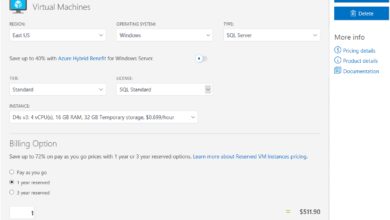
For example, an East US region D4s v3 VM costs approximately $0.192/hour on-demand but drops to $0.085/hour with a 1-year reservation. Use the Azure Pricing Calculator to model these scenarios.
Storage: Don’t Overlook Hidden Fees
Storage costs go beyond just the price per GB. Azure charges for data transactions (reads/writes), data retrieval, geo-replication, and even early deletion fees for certain tiers.
- Hot tier storage is more expensive but optimized for frequent access
- Cool and Archive tiers reduce costs but incur retrieval fees
- Snapshot and backup storage are often forgotten cost drivers
For instance, storing 1 TB in Standard HDD (LRS) in East US costs ~$20/month, but adding geo-redundant backup can double that. Always factor in egress (data transfer out) costs, which can add up quickly if you’re moving data to on-premises or other clouds.
Networking and Data Transfer: The Silent Budget Killers
Many teams underestimate networking costs. While inbound data is free, outbound data transfer—even between Azure regions—can become expensive at scale.
calculate azure costs – Calculate azure costs menjadi aspek penting yang dibahas di sini.
- Cross-region data transfer: ~$0.01/GB within the same geography
- Outbound data to the internet: starts at $0.08/GB (first 10 TB)
- Load balancers, Application Gateways, and ExpressRoute have separate hourly or bandwidth-based fees
A single 10 TB data export could cost $800—enough to fund several reserved VMs. Always design architectures with data locality in mind to minimize egress.
How to Calculate Azure Costs Using the Azure Pricing Calculator
The Azure Pricing Calculator is the most accessible tool for estimating costs before deployment. It allows you to model real-world scenarios and compare pricing across services.
Step-by-Step Guide to Using the Azure Pricing Calculator
Follow these steps to build an accurate cost model:
- Visit https://azure.microsoft.com/en-us/pricing/calculator/
- Add services like Virtual Machines, Blob Storage, or Azure SQL Database
- Select region, instance size, and usage duration (hours/month)
- Adjust for reserved instances or spot pricing
- Apply Azure Hybrid Benefit if using existing Windows Server licenses
- Export to PDF or share via link
This tool is ideal for pre-migration planning, budget proposals, and comparing cloud vs. on-premises TCO.
Advanced Tips for Accurate Cost Modeling
To get the most out of the calculator, consider these pro tips:
calculate azure costs – Calculate azure costs menjadi aspek penting yang dibahas di sini.
- Model peak vs. average usage to avoid underestimating load
- Include backup and disaster recovery components
- Factor in management tools like Azure Monitor (which has per-GB logging costs)
- Use the ‘Save’ feature to version your estimates over time
For example, a web app with 3 VMs, 500 GB SQL Database, and 2 TB of blob storage in East US might cost ~$1,200/month on-demand. With 1-year reservations and Azure Hybrid Benefit, that could drop to ~$650/month—a 46% savings.
Calculate Azure Costs in Real-Time with Azure Cost Management + Billing
While the Pricing Calculator is great for estimates, Azure Cost Management + Billing gives you real-time visibility into actual spending.
Navigating the Cost Management Dashboard
Access Cost Management from the Azure portal. The dashboard provides:
- Daily and monthly cost trends
- Top cost drivers by service and resource group
- Forecasting based on historical usage
- Custom views filtered by tags, subscriptions, or departments
You can drill down into specific resources, view amortized vs. actual costs, and set up budgets with alerts.
Setting Up Budgets and Alerts
Proactive cost control starts with budgeting. Here’s how to create one:
calculate azure costs – Calculate azure costs menjadi aspek penting yang dibahas di sini.
- Go to Cost Management > Budgets
- Create a new budget (scope: subscription, resource group, or management group)
- Set monthly amount and alert thresholds (e.g., 80%, 100%)
- Assign email recipients (individuals or distribution lists)
- Choose alert frequency (monthly or real-time)
For example, set a $1,000/month budget for your dev team’s resource group. When spending hits $800, an email alert is sent—giving you time to investigate before overspending.
Using Tags to Track and Allocate Costs
Tags are key-value pairs (e.g., Environment=Dev, Owner=JohnDoe) that let you organize and filter costs. Without tags, you can’t answer questions like “How much does the marketing team spend on Azure?”
- Apply tags at resource, resource group, or subscription level
- Use consistent naming conventions across teams
- Integrate with Azure Policy to enforce tagging compliance
Once tagged, you can generate cost reports by department, project, or environment—enabling true chargeback models.
Calculate Azure Costs with Power BI and Custom Reporting
For enterprises needing advanced analytics, exporting cost data to Power BI unlocks deeper insights. Azure Cost Management integrates natively with Power BI for customizable dashboards.
Connecting Azure Cost Data to Power BI
Follow these steps:
calculate azure costs – Calculate azure costs menjadi aspek penting yang dibahas di sini.
- In Cost Management, go to Exports
- Create a daily export of cost data to a storage account
- Use the Azure Cost Management content pack in Power BI
- Connect to your storage account and import data
The pre-built reports show trends, top spenders, reservation utilization, and forecasted spend.
Building Custom Dashboards for Executive Reporting
With Power BI, you can create tailored views for different stakeholders:
- Finance teams: Monthly spend by department
- IT leaders: VM utilization and reservation coverage
- Project managers: Cost per application or workload
You can also blend cost data with business metrics (e.g., revenue per app) to show ROI of cloud investments.
Optimize and Reduce Azure Costs After Calculation
Calculating Azure costs is just the first step. The real value comes from using that data to optimize spending.
Identify and Eliminate Idle or Underutilized Resources
Use Azure Advisor to find resources running below capacity:
calculate azure costs – Calculate azure costs menjadi aspek penting yang dibahas di sini.
- VMs with CPU utilization < 5% for 7+ days
- Unattached disks or unused public IPs
- Over-provisioned databases that can be downsized
Right-sizing a single oversized VM can save hundreds per year. Automate shutdowns for dev/test environments using Scheduled Start/Stop.
Leverage Reservations and Savings Plans
Commit to 1- or 3-year terms for VMs, SQL Database, or Cosmos DB to lock in lower rates:
- Up to 72% savings on VMs
- Flexible size flexibility within the same VM series
- Apply reservations across subscriptions using shared scope
Use the Reservation Recommendations tool in Cost Management to identify the best candidates.
Automate Cost Governance with Azure Policies
Prevent cost overruns by enforcing rules at scale:
- Require tagging on all new resources
- Block creation of high-cost VM sizes in dev environments
- Enforce use of managed disks or specific storage tiers
For example, create a policy that denies VM creation without CostCenter and Environment tags—ensuring all spending is accountable.
calculate azure costs – Calculate azure costs menjadi aspek penting yang dibahas di sini.
Third-Party Tools to Calculate Azure Costs More Effectively
While Azure’s native tools are robust, third-party platforms offer enhanced features for multi-cloud visibility, AI-driven recommendations, and FinOps workflows.
Top Third-Party Cost Management Tools
- CloudHealth by VMware: Advanced analytics, governance, and optimization for Azure, AWS, and GCP
- Azurelytics: Specialized in Azure cost intelligence with real-time alerts and showback portals
- Binadox: Multi-cloud SaaS and IaaS cost tracking with usage metering
- Datadog Cloud Cost Management: Integrates cost with performance monitoring
These tools often provide better forecasting, anomaly detection, and integration with procurement systems.
When to Use Third-Party vs. Native Tools
Stick with native Azure tools if:
- You’re Azure-only
- Your needs are basic (budgets, alerts, tagging)
- You want zero additional cost
Consider third-party tools if you need:
- Multi-cloud cost aggregation
- Advanced anomaly detection (e.g., sudden 300% cost spike)
- Dedicated FinOps team workflows
- Integration with ERP or finance systems
Best Practices to Continuously Calculate and Manage Azure Costs
Cost management isn’t a one-time task. It requires ongoing discipline and cultural alignment.
calculate azure costs – Calculate azure costs menjadi aspek penting yang dibahas di sini.
Establish a FinOps Culture
FinOps (Cloud Financial Management) brings together finance, engineering, and operations to optimize cloud spend. Key practices include:
- Monthly cost review meetings
- Cost accountability per team or product owner
- Training developers on cost implications of their code
According to the FinOps Foundation, organizations with mature FinOps practices see 20-30% lower cloud costs.
Conduct Regular Cost Audits
Perform quarterly audits to:
- Review reservation utilization (are you using what you reserved?)
- Identify zombie resources
- Validate tagging compliance
- Reforecast annual budgets based on actuals
Use Azure Advisor and Cost Analysis reports as your audit checklist.
Integrate Cost into DevOps Pipelines
Shift cost awareness left by integrating cost checks into CI/CD pipelines:
calculate azure costs – Calculate azure costs menjadi aspek penting yang dibahas di sini.
- Fail deployments that exceed cost thresholds
- Display estimated cost impact during pull requests
- Automatically tag resources created via IaC (Terraform, ARM templates)
Tools like Infracost can estimate costs from Terraform code before deployment.
How do I calculate my Azure monthly bill?
You can calculate your Azure monthly bill using the Azure Pricing Calculator for estimates, or use Azure Cost Management + Billing for real-time tracking. Include compute, storage, networking, and any reserved instances. Factor in data egress and management tools for accuracy.
What are the most common hidden costs in Azure?
Common hidden costs include data egress (outbound transfers), snapshot and backup storage, geo-replication, public IP addresses, and underutilized or orphaned resources. Always model these in your cost calculations.
calculate azure costs – Calculate azure costs menjadi aspek penting yang dibahas di sini.
Can I get a detailed cost breakdown by team or project?
Yes. Use tags (e.g., Department=Marketing, Project=CRM) on your Azure resources, then filter cost reports in Azure Cost Management or Power BI by those tags to get granular breakdowns.
How can I reduce my Azure bill by 50%?
You can reduce your Azure bill by right-sizing VMs, deleting unused resources, using reserved instances (up to 72% off), enabling auto-shutdown for dev environments, and optimizing storage tiers. Combine these with tagging and budget alerts for sustained savings.
Is Azure Cost Management free to use?
Yes, Azure Cost Management + Billing is free for all Azure customers. You only pay for the resources you consume. Exporting data to Power BI or using advanced features like reservations analysis is also free.
Learning how to calculate Azure costs is the foundation of cloud financial health. From using the Azure Pricing Calculator for planning to leveraging Cost Management for real-time insights, every tool plays a role in preventing waste. By combining native tools with best practices like tagging, reservations, and FinOps culture, you can turn cloud spending from a cost center into a strategic advantage. Start today—your next bill will thank you.
Recommended for you 👇
Further Reading: