Welcome to the ultimate guide on Azure Standard—your gateway to understanding Microsoft’s foundational cloud service tier. Whether you’re new to cloud computing or optimizing enterprise workloads, this deep dive reveals everything you need to know.




What Is Azure Standard and Why It Matters

The term azure standard typically refers to the Standard tier of Microsoft Azure services—offering a balanced mix of performance, reliability, and cost-efficiency. Unlike the Basic tier, which is designed for lightweight applications, the Standard tier supports production-grade workloads with enhanced scalability and availability features.
Defining the Azure Standard Tier
The Azure Standard tier spans multiple services, including Virtual Machines, Storage, Networking, and App Services. It’s engineered for businesses that require predictable performance, SLA-backed uptime (often 99.9%), and integration with enterprise-grade tools.
- Available across global Azure regions
- Supports auto-scaling and load balancing
- Includes monitoring and diagnostics tools
This tier is not a single product but a classification applied to various Azure resources, ensuring consistent service quality.
How Azure Standard Differs from Other Tiers
Microsoft Azure offers multiple service tiers: Basic, Standard, and Premium. The azure standard sits in the middle, balancing cost and capability.
- Basic Tier: Ideal for dev/test environments; limited scalability and no SLA for some services.
- Standard Tier: Designed for production apps; includes high availability, redundancy, and monitoring.
- Premium Tier: Highest performance, lowest latency, advanced features like zone redundancy and enhanced security.
“The Standard tier is where most enterprise applications live—it’s the sweet spot between cost and reliability.” — Microsoft Azure Architect Guide
Azure Standard Virtual Machines Explained
One of the most widely used components under the azure standard umbrella is Azure Virtual Machines (VMs). These are on-demand, scalable computing resources that allow organizations to run Windows or Linux workloads in the cloud.
Types of Standard VMs
Azure categorizes Standard VMs based on use cases and performance profiles:
- General Purpose (D-series): Balanced CPU-to-memory ratio. Ideal for web servers, small databases.
- Compute Optimized (F-series): High CPU performance. Best for batch processing and network appliances.
- Memory Optimized (E-series): High memory-to-CPU ratio. Suited for relational databases and in-memory analytics.
- Storage Optimized (Ls-series): High disk throughput. Used for big data and data warehousing.
- GPU Optimized (NC/ND-series): For machine learning and video rendering.
Each series comes in multiple sizes, allowing granular control over resource allocation.
Pricing and Cost Management
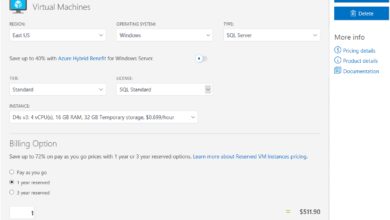
Understanding the cost structure of azure standard VMs is crucial for budgeting. Pricing is based on:
- VM size and family
- Region and availability zone
- Usage duration (pay-as-you-go, reserved instances, spot instances)
- Associated resources (disk, bandwidth, public IP)
Microsoft offers the Azure Pricing Calculator to estimate monthly costs. Reserved instances can save up to 72% compared to pay-as-you-go, making them ideal for long-term workloads.
Azure Standard Storage: Reliability Meets Performance
Storage is a cornerstone of any cloud infrastructure. The azure standard storage tier provides durable, scalable, and secure data storage solutions for diverse workloads.
Types of Standard Storage Accounts
Azure offers several types of storage accounts under the Standard tier:
- Standard General Purpose v2: Most common; supports blobs, files, queues, tables, and disks.
- Standard Page Blob: Optimized for random read/write operations, used for VM disks.
- Standard Block Blob: Ideal for streaming and backup; cost-effective for large unstructured data.
- Standard File Storage: Cloud-based SMB/NFS shares for hybrid environments.
These accounts support replication options like LRS (Locally Redundant Storage), ZRS (Zone-Redundant), GRS (Geo-Redundant), and RA-GRS (Read-Access GRS).
Data Redundancy and Durability
One of the key advantages of azure standard storage is its built-in redundancy. For example:
- LRS: Copies data three times within a single data center.
- GRS: Replicates data to a secondary region hundreds of miles away.
- ZRS: Spans multiple availability zones within a region for high availability.
Azure guarantees 99.9% availability for Standard storage and 99.999999999% (11 nines) durability for stored objects.
Networking with Azure Standard Load Balancer
Efficient networking is critical for application performance. The azure standard Load Balancer ensures high availability and low-latency traffic distribution across VMs.
Features of Standard Load Balancer
The Standard Load Balancer offers advanced capabilities over its Basic counterpart:
- Supports both public and internal load balancing
- Integration with Availability Zones for zone-redundant setups
- Outbound rules for NAT (Network Address Translation)
- Enhanced monitoring via Azure Monitor and Log Analytics
- Security integration with Network Security Groups (NSGs)
It operates at Layer 4 (TCP/UDP) and can handle millions of flows per second.
Use Cases and Deployment Scenarios
Organizations use the azure standard Load Balancer in various scenarios:
- Web Applications: Distribute traffic across multiple web servers.
- Microservices: Route internal traffic between containerized services.
- Hybrid Architectures: Balance traffic between on-premises and cloud resources.
- High-Performance Computing: Manage large-scale parallel workloads.
When combined with Azure Application Gateway (Layer 7), it enables full-stack traffic management.
Security and Compliance in Azure Standard Services
Security is not an afterthought in azure standard offerings. Microsoft embeds security into every layer of the cloud stack, ensuring compliance with global standards.
Built-in Security Features
Standard-tier services include robust security mechanisms:
- Encryption at rest and in transit (using AES-256 and TLS 1.2+)
- Role-Based Access Control (RBAC) for granular permissions
- Integration with Azure Active Directory (AAD) for identity management
- DDoS Protection Standard (available as an add-on)
- Just-In-Time VM Access and Network Security Groups
These features help prevent unauthorized access and mitigate common attack vectors.
Compliance and Certifications
Microsoft Azure meets over 100 compliance certifications, many of which apply directly to azure standard services:
- GDPR (General Data Protection Regulation)
- ISO/IEC 27001, 27017, 27018
- HIPAA (Health Insurance Portability and Accountability Act)
- SOC 1, SOC 2, SOC 3
- PCI DSS (Payment Card Industry Data Security Standard)
Organizations can leverage Azure’s Compliance Manager to assess and manage regulatory requirements.
Scaling and High Availability with Azure Standard
One of the biggest advantages of the azure standard tier is its support for scalable and resilient architectures.
Auto-Scaling Capabilities
Azure allows automatic scaling of VMs, apps, and services based on metrics like CPU usage, memory, or queue length. With the Standard tier:
- Scale sets can deploy hundreds of VMs automatically
- Rules can be time-based or metric-driven
- Integration with Azure Monitor enables real-time response to load changes
This ensures optimal performance during traffic spikes without over-provisioning.
Availability Zones and Sets
To prevent downtime due to hardware failures, Azure offers:
- Availability Sets: Distribute VMs across fault and update domains within a data center.
- Availability Zones: Physically separate data centers within a region (supported in Standard tier).
Using Availability Zones with Standard Load Balancer and Standard Public IPs enables zone-redundant architectures with 99.99% SLA.
Monitoring and Management of Azure Standard Resources
Effective cloud management requires visibility. The azure standard tier integrates seamlessly with Azure’s monitoring and management tools.
Azure Monitor and Log Analytics
Azure Monitor collects telemetry from all Standard-tier resources:
- Performance metrics (CPU, disk, network)
- Application logs and traces
- Security events and audit logs
- Custom metrics via APIs
Log Analytics allows querying and visualizing this data, helping teams detect anomalies and troubleshoot issues.
Automation with Azure Automation and Runbooks
Organizations can automate routine tasks using:
- Scheduled start/stop of VMs to save costs
- Automated patching and configuration management
- Self-healing workflows for failed services
Runbooks, written in PowerShell or Python, execute these automations reliably across Standard-tier environments.
Migrating to Azure Standard: Best Practices
Many organizations migrate from on-premises or other clouds to azure standard services. A structured approach ensures success.
Assessment and Planning
Before migration, assess current infrastructure using tools like:
- Azure Migrate: Discovers on-premises servers, assesses compatibility, and estimates costs.
- Microsoft Assessment and Planning Toolkit (MAP): Provides detailed inventory and readiness reports.
- Cost Management + Billing: Forecast spending on Standard-tier resources.
Define clear goals: cost reduction, scalability, or disaster recovery.
Execution and Optimization
Use the following strategies during migration:
- Lift-and-shift VMs using Azure Site Recovery
- Re-architect apps for cloud-native patterns (e.g., microservices)
- Optimize post-migration with Azure Advisor recommendations
Post-migration, continuously monitor performance and adjust VM sizes or storage tiers as needed.
Common Pitfalls and How to Avoid Them
Even with robust azure standard services, misconfigurations can lead to cost overruns or downtime.
Over-Provisioning Resources
Many users select larger VMs than necessary, leading to wasted spending. Solution:
- Use Azure Advisor to right-size VMs
- Monitor performance trends over time
- Test smaller instances before scaling up
Ignoring Egress Costs
Data transfer out of Azure (egress) can become expensive. Tips:
- Use Content Delivery Network (CDN) to reduce egress
- Compress data before transfer
- Avoid frequent cross-region replication unless necessary
“The biggest surprise in Azure isn’t the compute cost—it’s the egress fees.” — Cloud Cost Analyst, 2023
What is the difference between Azure Standard and Premium tiers?
The main difference lies in performance, availability, and cost. Azure Standard offers balanced performance with 99.9% SLA, suitable for most production workloads. Premium provides higher performance, lower latency, zone redundancy, and enhanced support, ideal for mission-critical applications. Premium also includes advanced features like ultra disks and accelerated networking.
Can I downgrade from Azure Premium to Standard?
Yes, in many cases you can downgrade Azure resources from Premium to Standard, such as VMs or storage accounts. However, some features (like ultra disks or zone-redundant load balancers) are not available in Standard and will be lost. Always back up data and test in a non-production environment before downgrading.
Does Azure Standard include backup and disaster recovery?
Azure Standard services do not automatically include backup, but they are compatible with Azure Backup and Site Recovery. You must configure these separately. Standard-tier VMs and storage can be protected with recovery services vaults, enabling point-in-time restores and cross-region replication.
Is Azure Standard suitable for enterprise applications?
Absolutely. Most enterprise applications run on Azure Standard due to its balance of cost, performance, and reliability. With proper architecture (availability zones, load balancing, monitoring), Standard-tier services meet the demands of large-scale business applications.
How do I monitor costs for Azure Standard resources?
Use Azure Cost Management + Billing to track spending. Set up budgets, alerts, and reports. Tag resources by department, project, or environment for better cost allocation. Combine this with Azure Advisor recommendations to optimize usage and eliminate waste.
In conclusion, the azure standard tier is the backbone of Microsoft’s cloud ecosystem—offering a reliable, secure, and scalable foundation for modern applications. From virtual machines and storage to networking and security, it delivers enterprise-grade capabilities without the complexity of higher tiers. By understanding its features, pricing, and best practices, organizations can leverage Azure Standard to drive digital transformation efficiently. Whether you’re migrating legacy systems or building new cloud-native apps, the Standard tier provides the perfect balance of performance and value. As cloud adoption grows, mastering Azure Standard becomes not just beneficial—but essential.
Further Reading: