Cloud computing has revolutionized the way businesses operate, and when it comes to scalable, secure, and intelligent solutions, ‘and azure’ stands at the forefront. Whether you’re integrating services, building apps, or managing data, understanding how to leverage ‘and azure’ can be a game-changer for your digital transformation.





Understanding the Core of and azure

The phrase ‘and azure’ may seem ambiguous at first glance, but in the context of cloud technology, it often refers to the integration of Microsoft Azure with other platforms, tools, or services. Microsoft Azure is one of the leading cloud computing platforms, offering over 200 services including computing, analytics, storage, and networking. When we say ‘and azure’, we’re typically talking about how Azure connects, enhances, and collaborates with other technologies to deliver powerful, end-to-end solutions.
What Does ‘and azure’ Actually Mean?
The term ‘and azure’ isn’t just a random conjunction—it symbolizes integration. It reflects the growing trend of combining Azure with third-party tools, on-premise systems, AI platforms, and development environments. For example, ‘Power BI and Azure’ enables real-time analytics, while ‘Kubernetes and Azure’ powers scalable containerized applications.
- Represents integration between Azure and external technologies
- Commonly used in search queries like ‘AWS and Azure’ or ‘Docker and Azure’
- Highlights hybrid, multi-cloud, and interoperable strategies
The Evolution of Azure in the Cloud Ecosystem
Since its launch in 2010, Microsoft Azure has evolved from a simple cloud hosting platform into a comprehensive ecosystem supporting AI, IoT, machine learning, and edge computing. The idea of ‘and azure’ has grown alongside this evolution, as more organizations seek to combine Azure’s capabilities with their existing tech stacks.
According to Microsoft, Azure now serves over 95% of Fortune 500 companies, demonstrating its enterprise-grade reliability and flexibility. This widespread adoption has made ‘and azure’ a common theme in IT architecture discussions. Learn more about Azure’s evolution here.
Azure isn’t just a cloud platform—it’s a bridge between legacy systems and future innovation.
Why ‘and azure’ Integration Matters for Modern Businesses
In today’s fast-paced digital landscape, no single platform can do everything. That’s where ‘and azure’ comes into play. By integrating Azure with other tools, businesses can create seamless workflows, reduce operational costs, and accelerate time-to-market.
Breaking Down Silos with Hybrid Cloud Solutions
Many enterprises operate in hybrid environments—part on-premise, part cloud. Azure supports hybrid cloud models through services like Azure Arc and Azure Stack, allowing organizations to manage resources across environments from a single control plane.
- Azure Arc enables governance of servers across on-premise, multi-cloud, and edge
- Azure Stack brings Azure services into private data centers
- Reduces complexity and increases consistency in hybrid deployments
This integration is a prime example of ‘and azure’ in action—combining Azure with existing infrastructure to deliver unified management.
Enhancing Security Across Platforms
Security is a top concern for IT leaders, and ‘and azure’ strategies can significantly improve protection. Azure Security Center, now part of Microsoft Defender for Cloud, integrates with third-party security tools to provide a holistic view of threats across hybrid and multi-cloud environments.
For instance, integrating Azure with Palo Alto Networks or CrowdStrike allows for centralized threat detection and response. This interoperability ensures that security policies are enforced consistently, whether workloads run in Azure, AWS, or on-premise.
Security isn’t a feature—it’s a foundation, and ‘and azure’ strengthens that foundation.
Top 5 Integrations Involving and azure
The real power of ‘and azure’ lies in its ability to connect with other leading technologies. Below are five of the most impactful integrations driving innovation today.
Azure and Kubernetes: Scaling Containerized Applications
Containerization has become the standard for modern application development. Azure Kubernetes Service (AKS) simplifies the deployment, management, and scaling of Kubernetes clusters. When developers search for ‘Kubernetes and Azure’, they’re often looking for best practices in orchestrating microservices in the cloud.
- AKS reduces operational overhead with automated scaling and updates
- Integrates with Helm, Istio, and Prometheus for advanced DevOps workflows
- Supports multi-region deployments for high availability
Organizations use ‘Kubernetes and azure’ to build resilient, cloud-native applications. Explore AKS documentation to get started.
Azure and GitHub: Streamlining CI/CD Pipelines
After Microsoft acquired GitHub, the integration between ‘GitHub and azure’ became a cornerstone of modern DevOps. Developers can now trigger Azure deployments directly from GitHub repositories using GitHub Actions.
This integration enables automated testing, staging, and production deployments, reducing manual errors and accelerating release cycles. For example, a push to the main branch can automatically deploy a web app to Azure App Service.
- GitHub Actions support deployment to Azure Functions, Web Apps, and VMs
- Secrets management ensures secure credential handling
- Enables Infrastructure as Code (IaC) with Terraform and Bicep
Code flows from commit to cloud—seamlessly with ‘GitHub and azure’.
Azure and Power BI: Unlocking Data Insights
Data is the new currency, and ‘Power BI and azure’ is a powerful duo for turning raw data into actionable insights. Azure Synapse Analytics, Azure Data Lake, and Azure SQL Database can all feed directly into Power BI for real-time dashboards and reports.
For instance, a retail company might use Azure Event Hubs to collect point-of-sale data, process it in Azure Stream Analytics, and visualize trends in Power BI—all within a single integrated ecosystem.
- Real-time data streaming and visualization
- AI-powered insights with Power BI’s Quick Insights feature
- Role-based access control for secure data sharing
This synergy exemplifies how ‘and azure’ enhances business intelligence. Discover Power BI and Azure integration.
Building AI Solutions with and azure
Artificial Intelligence is no longer a futuristic concept—it’s a business imperative. ‘And azure’ plays a crucial role in democratizing AI through accessible, scalable, and secure services.
Azure Machine Learning and MLOps
Azure Machine Learning is a cloud-based environment for training, deploying, and managing machine learning models. When combined with MLOps (Machine Learning Operations), it enables teams to automate the AI lifecycle.
For example, data scientists can use Azure ML to train a fraud detection model, then deploy it via Azure Kubernetes Service. Monitoring is handled through Azure Monitor, creating a full ‘and azure’ pipeline from data to deployment.
- Automated model training with AutoML
- Model versioning and experiment tracking
- Integration with Python, TensorFlow, and PyTorch
This end-to-end capability makes ‘Azure Machine Learning and azure’ a go-to for enterprise AI.
Cognitive Services and Custom AI Models
Not every organization has a team of PhDs in AI. That’s where Azure Cognitive Services come in—pre-built APIs for vision, speech, language, and decision-making.
For example, a healthcare app can use ‘Computer Vision and azure’ to analyze medical images, or ‘Text Analytics and azure’ to extract insights from patient records. These services can be customized and extended with your own data, blending off-the-shelf AI with domain-specific intelligence.
AI should be accessible, not exclusive—and ‘and azure’ makes it possible.
Developers can integrate these APIs into applications using REST calls or SDKs in Python, .NET, or JavaScript. Explore Azure AI services.
Cost Management and Optimization in and azure Environments
While Azure offers immense power, uncontrolled usage can lead to spiraling costs. Effective cost management is essential when implementing ‘and azure’ strategies.
Using Azure Cost Management + Billing
Azure provides built-in tools to monitor, analyze, and optimize spending. The Azure Cost Management dashboard offers detailed reports on resource usage, budget alerts, and forecasting.
- Set budgets with automated alerts when thresholds are exceeded
- Tag resources (e.g., by department or project) for granular cost tracking
- Identify idle or underutilized resources for decommissioning
For organizations using ‘and azure’ across multiple subscriptions or tenants, this tool is indispensable for financial governance.
Reserved Instances and Spot VMs
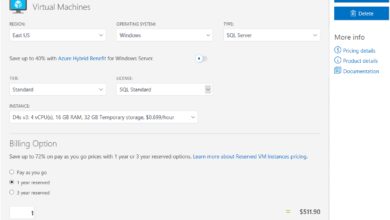
To reduce costs, Azure offers Reserved Virtual Machine Instances, which provide up to 72% savings compared to pay-as-you-go pricing. These are ideal for workloads with predictable usage patterns.
For fault-tolerant, batch-processing jobs, Azure Spot VMs offer even greater savings—up to 90% off—by using surplus compute capacity. Combining these with autoscaling ensures cost efficiency without sacrificing performance.
Smart spending isn’t about cutting costs—it’s about maximizing value.
Real-World Case Studies of and azure Success
Theoretical benefits are compelling, but real-world results are even more convincing. Let’s look at how leading organizations have leveraged ‘and azure’ to achieve transformation.
BMW Group: Digital Twin and Azure IoT
BMW uses Azure IoT Hub and Azure Digital Twins to create virtual replicas of their production lines. This ‘IoT and azure’ integration allows engineers to simulate changes, predict maintenance needs, and optimize manufacturing processes.
- Reduced downtime through predictive maintenance
- Improved production efficiency by 15%
- Enabled remote monitoring across global facilities
This case shows how ‘and azure’ can drive innovation in traditional industries.
ASOS: E-Commerce Scalability with Azure
Online fashion retailer ASOS relies on ‘Azure and e-commerce’ to handle massive traffic spikes during sales events. By using Azure App Service, Azure CDN, and Azure SQL Database, ASOS ensures fast, reliable performance even under peak load.
During Black Friday, ASOS processed over 1 million orders in a single day—without downtime. This scalability is a direct result of their ‘and azure’ architecture.
When millions are shopping, your cloud better be ready—and ASOS was, thanks to Azure.
Future Trends: What’s Next for and azure?
The cloud landscape is evolving rapidly, and ‘and azure’ will continue to play a central role in shaping the future of technology.
AI-Driven Automation and Azure
Microsoft is investing heavily in AI-powered automation across Azure services. From Azure Automanage for VMs to AI-driven network optimization, the goal is to reduce manual intervention and improve reliability.
Future versions of ‘and azure’ integrations may include self-healing systems, predictive scaling, and autonomous security responses—ushering in a new era of intelligent cloud operations.
Quantum Computing and Azure Quantum
While still in its early stages, Azure Quantum represents Microsoft’s bold vision for the future. This service provides access to quantum hardware and development tools, enabling researchers and developers to experiment with quantum algorithms.
Though not yet mainstream, ‘Quantum and azure’ could revolutionize fields like cryptography, drug discovery, and logistics optimization in the coming decade.
The future isn’t just cloud—it’s quantum, and ‘and azure’ is paving the way.
What does ‘and azure’ mean in cloud computing?
The phrase ‘and azure’ typically refers to the integration of Microsoft Azure with other technologies, platforms, or services. It highlights how Azure connects with tools like Kubernetes, GitHub, Power BI, or IoT devices to create comprehensive, scalable solutions.
How can I integrate GitHub with Azure?
You can integrate GitHub with Azure using GitHub Actions to automate CI/CD pipelines. This allows code commits to trigger automated builds, tests, and deployments to Azure services like App Service, Functions, or Kubernetes.
Is Azure better than AWS?
Both Azure and AWS are leading cloud providers with strengths in different areas. Azure excels in hybrid cloud, enterprise integration, and Microsoft ecosystem compatibility, while AWS has a broader global infrastructure and more mature service offerings. The choice depends on your specific needs.
How do I reduce Azure cloud costs?
Use Azure Cost Management to monitor spending, apply tags for cost allocation, leverage Reserved Instances for predictable workloads, and use Spot VMs for non-critical tasks. Regularly review and decommission unused resources.
Can I use Azure for AI and machine learning?
Yes, Azure offers a comprehensive suite of AI and machine learning services, including Azure Machine Learning, Cognitive Services, and Azure Databricks. These tools enable developers and data scientists to build, train, and deploy AI models at scale.
As we’ve explored, ‘and azure’ is more than just a keyword—it’s a philosophy of integration, innovation, and intelligent cloud computing. From hybrid architectures to AI-driven automation, Azure continues to empower organizations to build, scale, and secure their digital futures. Whether you’re a developer, IT manager, or business leader, embracing ‘and azure’ strategies can unlock new levels of efficiency, agility, and growth. The cloud is no longer just a destination—it’s a dynamic ecosystem, and Azure is at its heart.
Further Reading: